
The Keepers
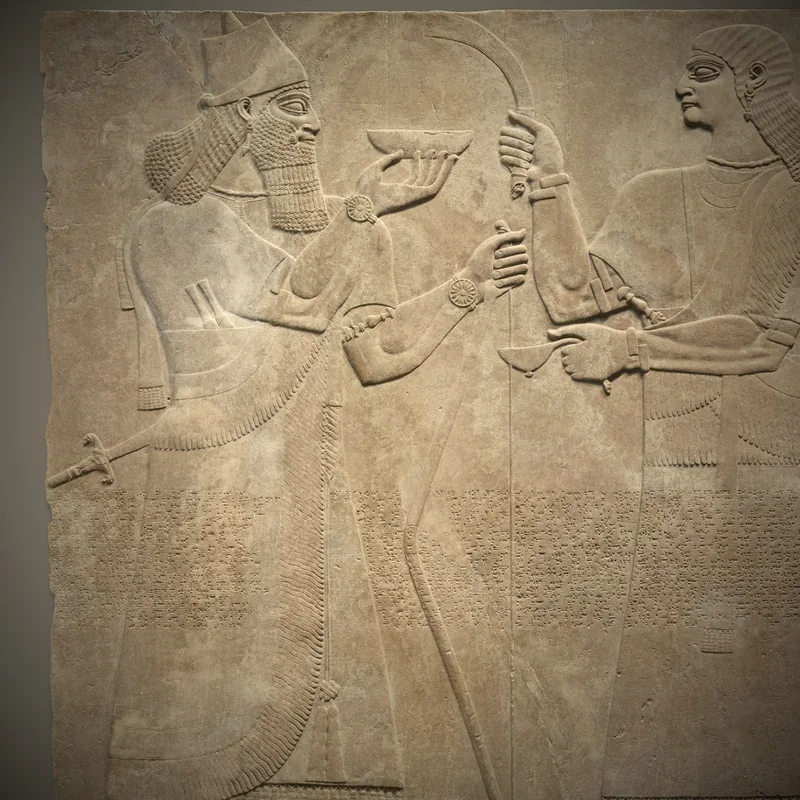
Every one of them was told to share it. Every one of them said yes. Not one of them did.
Who the Keepers are
In the book, a Keeper is a ruler. A king, an emperor, a queen, a council, a company. Anyone with real power in their age.
For thousands of years, a new ruler was walked, hooded, into a dark room that smelled of reeds. There he was shown the Sealed Charter: all the knowledge people need to build things, and the rules for who is allowed to. And each was told the same thing. This was given to you to share with everyone.
After the thirteenth century, the page stopped going to kings. It was too dangerous. But the rulers stayed Keepers, because what the page stands for was already in their hands: the guilds, the laws, the licences, the ledgers. Nobody had to show them anything.
That is what the Watchers hoped for. One ruler, just one, who would hand it on.
What they did instead
They kept it. They ruled with it. Knowing how to build is power, and deciding who may build is the power behind the throne. No king wanted to give that away. One of them explains why, in the second chapter.
A king who shares what makes him king is a man with a hat.
"Everything is fine"
At the end of every reign, a thin stranger came to ask how it had gone. Had the Charter been shared? Was it in good hands?
The answer never changed. Everything is fine. Sometimes the ruler said it to the stranger's face, never guessing who he was. Sometimes he said it to the whole court, and the stranger was standing at the back. For four thousand years it was the same three words, and they were never true. Why the stranger kept accepting them is a story of its own: Soren, the Watcher.
The carriers
A Keeper never had to hide anything. Somebody else did that for him. While the rulers sat on what the Charter stood for, ordinary people kept the page itself alive, moved it when it was in danger, and wrote their names on the back. The book calls them the carriers. Their story is on the Sealed Charter page.
Roll call: the Keepers you meet in the book
- Sargon of Akkad, about 2334 BC. He built the first great empire in Mesopotamia. The book opens with him: the first great king to be walked into the room, though not the first king.
- Ammi-saduqa, Babylon, 1600s BC. He is remembered for a royal edict that cancelled debts. He saw the page once, on the day he took the throne, and wants to find it again.
- Akhenaten and Ramesses II, Egypt, 1300s and 1200s BC. Akhenaten turned Egypt to the worship of one god, the Aten, and later kings left his name off their lists. Ramesses ruled for sixty-six years. In the book, Akhenaten is walked into the room and shown the Charter, and Ramesses, too, is its Keeper.
- Ashurbanipal, Nineveh, 600s BC. He gathered a great library of clay tablets, and thousands of them survive. Shown the page, he wants to know who writes its lines.
- Cyrus and Darius, Persia, 539 to 486 BC. Cyrus took Babylon in 539 BC. Darius had his deeds carved into a cliff at Behistun in three languages. Both were shown the page.
- Alexander and the Ptolemies, 323 to 221 BC. Alexander died in Babylon in 323 BC. The Ptolemies who ruled Egypt after him built the Library of Alexandria. Alexander and Ptolemy each saw it.
- Qin Shi Huang, 221 to 210 BC. The first emperor of a united China. The historian Sima Qian says he ordered books burned. He saw the page too.
- Cleopatra and Augustus, 51 BC to AD 14. Cleopatra was the last Ptolemaic ruler of Egypt. Augustus became the first Roman emperor. Both saw it.
- Constantine, AD 312 to 337. The Roman emperor who called the Council of Nicaea in 325. He saw it too.
- Harun al-Rashid and al-Ma'mun, Baghdad, 786 to 833. Under their rule, Baghdad's scholars translated Greek books into Arabic. In the book, Harun is shown the Charter, and al-Ma'mun is its Keeper after him.
- The last caliph of Baghdad, 1258. Al-Musta'sim ruled when Hulagu's Mongol army took the city and killed him. In the book, Hulagu hears of the Charter from his wife and his shaman, and sends his men to find it.
- Philip IV of France, 1307. He had the Knights Templar arrested across France in October 1307. In the book, he finds the Charter without being shown it.
- Constantine XI, 1453. The last Byzantine emperor, who died when Constantinople fell to the Ottomans. In the book, he is asked how things stand while he is up on the walls.
- Rudolf II, Prague, 1580s to 1612. An emperor who filled his court with astronomers and alchemists, and received John Dee. In the book, he is the Keeper of his age.
- The East India Company, 1760 to 1850. A trading company with a royal charter that came to rule much of India. In the book, a company becomes the Keeper of its age.
- J. P. Morgan, 1890s to 1913. The banker who paid for Nikola Tesla's tower at Wardenclyffe, then refused to put in more. In the book, he is the Keeper of his age, though nobody ever shows him the page.
- Harry Truman, 1945. He was told about the atomic bomb project only after he became president. In the book, he is the Keeper of his age, and is told what the Charter is by a man with a tray.
- The two blocs, 1947 to 1991. The United States and the Soviet Union. In the book, there are two Keepers at once, and one archive.
- Silicon Valley, 1995 to 2015. No crown at all. In the book, the page is carried by a woman who labelled pictures for two cents each.
Every one of them said "Everything is fine" when the stranger asked. Read the full story and find out what each one did with what they kept, and who the Watchers chose instead: the New Keeper.