
The Sealed Charter
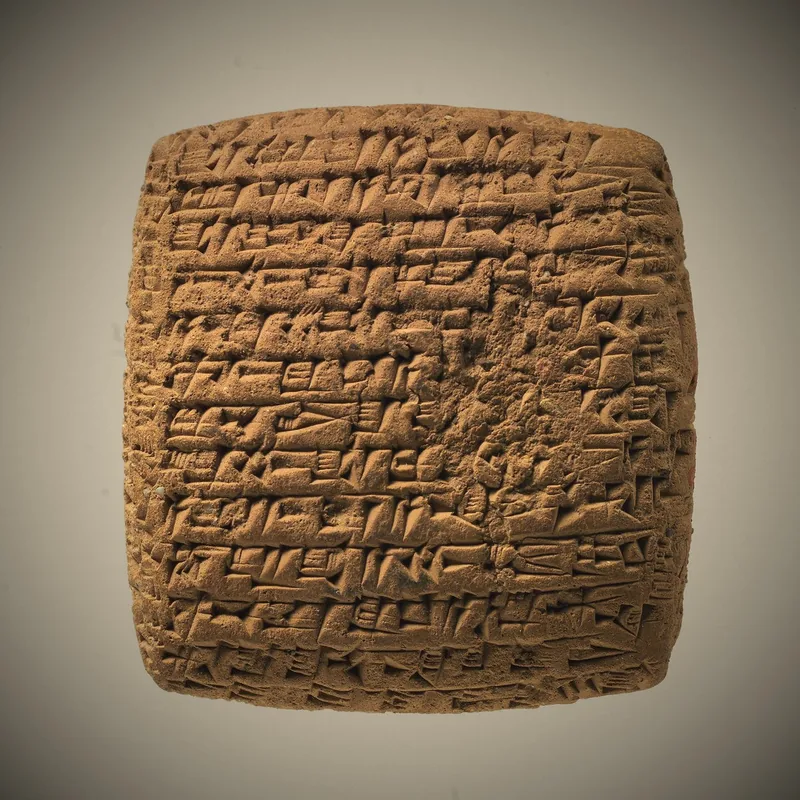
It was meant for everyone. For four thousand years, it stayed in the hands of whoever had the crown.
What it is
The Sealed Charter is a single sheet, folded small. It is not clay, not leather, not paper. It is the colour of weak tea, and it is warm to the touch, like something alive. At the bottom fold sits one grey seal.
You will not find it in a museum. No scholar has written about it. But if the book is right, the great kings of the ancient world were shown it once, and every ruler after them held what it stands for.
What it holds
The Charter holds two things. All the knowledge people need to build things. And the rules for who is allowed to.
The first part grows. Every time people work out something big, a new line appears on the front, in a small, cramped hand. To weigh silver and write the weight. To send a word faster than a horse. To split what cannot be split.
The second part is the dangerous one. Knowing how to build is power. Deciding who may build is more. Whoever holds the Charter does not just rule. He decides who else gets to.
And under the seal is the part nobody has read. What it says, and when it opens, is the last turn of the book.
Who it was given to
The Watchers trusted the people at the top. Kings, emperors, anyone with real power. For thousands of years, each new king was walked into a dark room, hooded, shown the Charter, and asked one question. Who sent you? Then each was told what the Charter was for. Share it with everyone.
Not one of them did. They kept it. They ruled with it. They became the Keepers, and they told the Watchers, every time, that everything was fine.
Soren, who watched them all, has a theory about why.
In four thousand years of watching you, I learned one thing. You don't care about ideas. You care about things. Things you can hold, buy, own, or lose.
The people who carried it
Kings looked at the Charter. They did not carry it. That job went to ordinary people: a cook, a copyist, a lamp girl, a physician, a chambermaid. The book calls them the carriers. They hid the page in boring places and signed the back, one after another, so the next one would know who held it before. Nobody searches a fish cart.
The page moved whenever it was in danger, and it was often in danger. Sippar, Egypt, Nineveh, Alexandria, China, Nicaea, Baghdad, Paris, London, New York. It learned something in every place.
Want to know who holds it now? Read the full story. Then meet the strangest Keeper of all: the New Keeper.